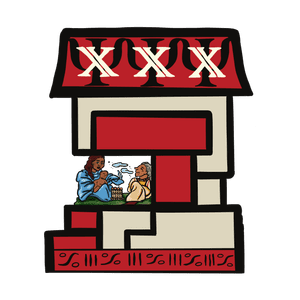
#HistoryIsOurHeritage: Centering Latina/o/e History and the Psychology of Who We Are
Each year, from September 15 through October 15, the United States observes National Hispanic Heritage Month. The recognition began in 1968, when President Lyndon B. Johnson established Hispanic Heritage Week, and expanded to a month in 1988 under President Ronald Reagan.
This month should be more than an opportunity to celebrate the richness of Latinx cultures. It holds particular importance in our current climate, as rhetoric suggesting that Latinx people do not belong in this country continues to intensify. At the same time, our communities remain underrepresented in school curricula—even though Latinx people and our ancestors have lived on these lands for thousands of years and have participated in the evolving history of the United States since before its founding.
It has rarely been more important to center the long and deeply rooted history of Latinx people in this country. Heritage Month offers an opportunity to bring our contributions, struggles, resistance, and survival more fully into the public consciousness.
Consider one of the strengths of Black History Month: It explicitly centers Black history. We remember people, movements, ideas, and defining events. We learn about the horrors of slavery and segregation, but also about resistance, institution-building, political leadership, cultural innovation, and the continuing struggle for justice. Black History Month demonstrates that honoring a people requires more than celebrating cultural expression; it requires taking their historical experiences seriously.
Now consider what is most often highlighted during Hispanic or Latinx Heritage Month. Too frequently, the focus is limited to festivals featuring food, music, dance, and brightly colored clothing. These expressions are meaningful and deserve celebration. They carry memory, identity, creativity, and connection. But they cannot bear the full weight of our heritage.
When culture is presented without history, people can be reduced to entertainment. Under the guise of celebrating “heritage,” mainstream institutions sometimes turn our communities into two-dimensional caricatures brought onstage to perform, feed, or entertain others. Our food is welcomed while our families are criminalized. Our music is celebrated while our histories are excluded from classrooms. Our labor is relied upon while our belonging is questioned.
That is not full recognition. Heritage without history is another form of erasure.
Latinx history is United States history. Yet many people complete their education without learning that:
In 1914, Mexican American families prevailed in Maestas v. Shone*, one of the country’s earliest successful legal challenges to the segregation of Mexican American schoolchildren. Three decades later, Mendez v. Westminster became a landmark federal school-desegregation case and helped lay important legal groundwork for Brown v. Board of Education.
* The iconic American cowboy emerged substantially from the traditions of Mexican vaqueros, whose knowledge, language, equipment, horsemanship, and cattle-ranching practices shaped what later became known as cowboy culture.
* Mexican American students organized historic school walkouts in Los Angeles, South Texas, and other communities to challenge discriminatory treatment, unequal facilities, culturally exclusionary curricula, and limited educational opportunities.
* La Raza Unida Party built an independent Chicano political movement that won local offices, developed new community leadership, and challenged the exclusion of Mexican Americans from established political institutions.
* On August 29, 1970, approximately 20,000 to 30,000 people joined the National Chicano Moratorium in East Los Angeles to protest the Vietnam War and the disproportionate deaths of Mexican American service members. It became one of the largest Chicano demonstrations of its era and the largest antiwar action organized by a single ethnic group in the United States.
* Hispanic and Latino service members have received dozens of Medals of Honor, including for service during World War II, even as many Mexican American veterans returned home to segregation and discrimination.
* Black and Latina transgender and queer activists became leading figures in the movement that grew around the 1969 Stonewall uprising. Their stories remind us that Latinx history also includes struggles for LGBTQ+ freedom—and that Stonewall itself was a collective uprising rather than the achievement of any single individual.
* Mesoamerica and the Andean region were two of the world’s independently developing centers of early civilization. Civilizations across these regions produced sophisticated systems of agriculture, architecture, astronomy, governance, philosophy, and mathematics.
* The Maya independently developed a sophisticated concept and symbol for zero. Within Maya thought, zero could signify not simply absence, but completion, transition, origin, and possibility.
* The United Farm Workers grew from organizations established by Dolores Huerta, César Chávez, and many other farmworkers and organizers. Through strikes, marches, organizing, and consumer boycotts, the movement compelled powerful agricultural corporations to recognize farmworkers’ demands and helped secure landmark labor agreements.
* In 1979, the Houston Police Department assembled six Spanish-speaking officers to investigate a backlog of unsolved homicides involving Latino victims. What became known as the Chicano Squad developed into the nation’s first all-Latino police unit devoted to investigating Latino homicide cases and continued its work for more than two decades.
These are not marginal additions to someone else’s story. They are part of the history of education, labor, war, civil rights, political participation, policing, science, culture, and democracy in the United States.
Knowing this history is not only a matter of recognition. It is also a matter of psychological well-being.
A rooted sense of self matters for everyone, but it can be especially consequential for communities that have experienced historical and continuing marginalization. Dr. Martha E. Bernal, the first woman of Mexican descent to earn a doctorate in clinical psychology in the United States, helped establish the study of ethnic identity development among Mexican American children. Her work demonstrated that children’s cultural identities deserve to be understood as central aspects of psychological development—not as peripheral concerns or obstacles to overcome.
Subsequent research has linked dimensions of ethnic and racial identity with psychological adjustment, belonging, engagement, and educational outcomes, although those relationships are complex and shaped by gender, context, discrimination, and the particular aspect of identity being measured. The central point remains: Young people develop their understanding of who they are partly through the histories they are taught—and through the histories withheld from them.
History shapes identity. Identity shapes what children imagine is possible for themselves, how they interpret their experiences, and whether they understand their communities primarily through stereotypes or through a fuller inheritance of knowledge, struggle, creativity, and strength.
One of Chicana/o/x psychology’s central critiques of mainstream psychology is its insufficient attention to history. People do not enter counseling rooms—or classrooms, workplaces, families, and communities—separated from colonization, displacement, migration, segregation, racism, resistance, and cultural survival.
In his 1983 book, Psychology of the Americas: Mestizo Perspectives on Personality and Mental Health, pioneering Chicano psychologist Manuel Ramírez III argued for a psychology grounded in the historical and cultural realities of the Americas. He examined how Indigenous and European traditions, colonization, cultural conflict, and mestizaje shaped distinct ways of understanding identity, personality, relationships, and wellness. His work challenged psychology to recognize that values such as connection to family and community, cultural flexibility, justice, and respect for multiple ways of knowing can be important dimensions of healthy development.
In other words, history is not merely background information. History lives within identity. It influences how we understand ourselves, how society perceives us, what we believe we deserve, and what futures we can envision.
Let us celebrate the music, food, dance, language, and cultural traditions that bring our communities joy. But let us refuse to stop there.
Let us also center our long history of confronting oppression and resisting discrimination. Let us teach the stories of the families who fought school segregation, the young people who walked out of unequal classrooms, the farmworkers who organized against powerful industries, the veterans who served a country that did not always serve them, the communities that built independent political power, and the ancestors whose intellectual and cultural achievements helped shape this hemisphere.
Let us remember that Latinx people are not recent additions to the American story. We did not suddenly appear at the border, in demographic projections, or during a designated heritage month. We have long been workers, thinkers, artists, healers, organizers, veterans, educators, builders, and creators of this society.
The Latinx community has always made history—and we are still making it.
That is why I propose that we begin calling this observance Hispanic History Month or Latinx History Month. The word heritage invites us to celebrate what has been passed down to us. The word history asks us to understand how we came to be here, what we endured, what we created, and how we helped shape this country. We need both—but history is too consequential to remain implied.
Changing the name would not mean abandoning heritage. It would mean understanding history as an essential part of our heritage. It would move the observance beyond cultural appreciation and toward fuller recognition: from enjoying our traditions to understanding our presence, from celebrating our contributions to teaching the struggles that made those contributions possible.
History shapes identity. History strengthens belonging. History challenges erasure.
Our history is our heritage. It is time we name it.